Ethnographic Treasures Unveiled
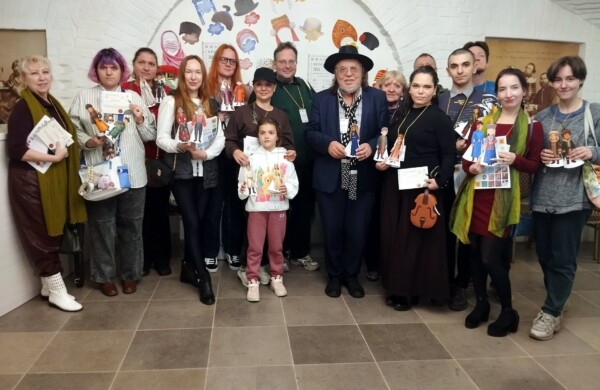
On June 17, the Russian Ethnographic Museum (REM) officially opened the exhibition «Return Our Patterns!» Ethnographic Origins of the Russian Style of Ivan Bilibin,» dedicated to the 150th birthday of the renowned Russian artist. The project explores the roots of Bilibin’s iconic style and for the first time presents items from the ethnographic collection he assembled over a century ago.
«Today we have the first opportunity to see the unique collection gathered by Ivan Bilibin and to touch his amazing legacy. In the artist’s jubilee year, widely celebrated across the country, we ask ourselves an important question: how to remain creators in the modern world? Let us, together with Bilibin, study the subtleties of the Russian North, ask ourselves the questions he posed, and seek answers relevant to us today. This exhibition-research will open many new horizons and help us take a fresh look at our past and future,» said REM Director Yulia Kupina at the opening.
According to organizers, Ivan Bilibin’s work, known far beyond Russia, is inextricably linked with the REM collection. In 1902–1904, on the museum’s commission, the artist undertook several expeditions to the Russian North: to the Tver, Vologda, Arkhangelsk, and Olonets provinces to collect ethnographic items, photograph, and conduct scientific research. These trips resulted in 12 collections that remain in the museum’s archives to this day.
The exhibition provides a rare opportunity to rediscover the distinctive world of the Russian North as seen through the eyes of artist, photographer, researcher, and collector Ivan Bilibin, whose fairy-tale illustrations have become an integral part of the visual image of Russian culture. The project brings together over 200 items from Bilibin’s collection, allowing a comparison between the artistic context of the era and the master’s «fairy-tale style.» Displayed are elements of Russian costume, kokoshniks, examples of women’s needlework, gingerbread boards, birch-bark containers, and household items, many shown for the first time.
Particularly noteworthy is the recreated costume of the Strelchikha (a female archer) from Bilibin’s illustrations for the fairy tale «Go I Know Not Whither.» The artist rendered the heroine’s outfit with ethnographic precision: every detail—headdress, shirt, sarafan, dushegreya, earrings—reproduces authentic parts of peasant women’s costumes from the Pinega River basin in Arkhangelsk province and the Kargopol district of Olonets province, all from Bilibin’s REM collection.
Exhibition Sections
The exhibition consists of five sections. The introduction presents a chronicle of Bilibin’s life and work. The second section introduces the world of artistic ideas and forms that influenced the creation of Bilibin’s «fairy-tale style,» as well as the early version of his «alphabet» of fairy-tale ornament. The next part is dedicated to the Neo-Russian style, dominant in Russian architecture and decorative applied arts of the last third of the 19th century. After his expeditions to the Russian North, Bilibin criticized the Neo-Russian style, although he had been somewhat dependent on it at the start of his career.
The final sections discuss Bilibin’s «discovery» during three expeditions of the unique world of folk art in the Russian North and how his style of book illustrations changed afterward. This «discovery» materialized in his ethnographic collection of physical objects, his own photographs, experiments in ethnographic drawing, and his use of Northern Russian motifs in page design, clothing depiction, and patterns, as well as in the world of objects.
The exhibition is open until September 13.